Originally posted by: nushhkiee
Mariam-uz-Zamani identity - I totally agree with you on the issue of Mariam-uz-Zamani. Her name being erased is a big deal, and I can’t help but think there was some intention behind it. Her identity as a Hindu princess and her role in Akbar’s court should’ve been acknowledged. Erasing her name and minimizing her importance feels like an effort to hide parts of history that don’t fit the idealized image of Akbar. The fact that she was Hindu and rose to such a powerful position is a big deal, so why ignore it? It feels like an attempt to downplay the role of women in history, especially if their faith or identity didn’t align with the narrative that was being promoted at the time. Moreover what about those texts that say Jodha was not Akbar' wife but bahu? 
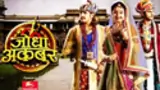
First of all, Jodha Bai doesn't exist. Jodh Bai does, and she indeed was Akbar's daughter-in-law and Salim's wife. However, the show JA was about Harka Bai, and it clearly mentions that within the first 30 seconds of every episode.
Coming to the issue of MUZ's identity being erased, there was definitely an attempt to do so, but not by Akbar. Most likely by later historians, under the influence of orthodox elements like Aurangzeb. More on this, here: (My words are in Bold)
https://www.indiaforums.com/forum/post/165759371
https://www.indiaforums.com/forum/post/165759937 (esp this one)
Look, Akbar might have been a skilled leader, and I’ll give him credit for doing some things that were ahead of his time. He had the ability to create alliances and expand the empire, and he understood the value of diplomacy. But that doesn’t make him above criticism. His treatment of Hinduism, his policies, and the things he allowed to happen during his reign don’t add up to this glowing picture of a perfect ruler. Akbar’s actions weren’t all noble, and the show’s portrayal of him as a larger-than-life figure doesn’t really reflect the more problematic parts of his reign.
@Bold, absolutely agree! No one is above criticism, certainly not some 16th century ruler. We can and should criticize anything and anyone that bothers us, and I'm glad you did. Just that I think it's also our responsibility to make sure we indulge in 'fair' criticism.
Also, I think you must read up on the social reforms of Akbar, either here in this thread or elsewhere. To me, they are what truly make him a great man, more than any military accomplishments or expansion or diplomacy or grandeur ever could. In fact, I would say the show didn't even touch the truly brilliant aspects of the man.. like the banning of sati, for example, no idea why!
To wrap it up, while I absolutely loved Jodha Akbar for its entertainment value and the way Akbar was portrayed in the show, the real Akbar....his actions, his policies....are much more complicated. I’m not here to glorify him. He did some good things, but he also made decisions that, when you look at them through a modern lens, are tough to defend.
I'm not here to glorify him, either. Neither was the show, in my opinion. Show was here for drama and TRPs, I'm here to defend a man I admire while also acknowledging his flaws, and we're all here to simply have a good time.. hai na? 
PS - Accha hua NCERT se nikal diya. It’s honestly frustrating how NCERT tries to paint Akbar as this perfect, "tolerant" ruler. They don’t exactly ignore his flaws, they just sweep them under the rug. Temple destruction, harsh campaigns, forced conversions? All conveniently downplayed. Why? To keep his image squeaky clean, of course. Sure, Akbar did some good, but he wasn’t a saint. Glorifying him like this completely ignores the messy reality of his reign. Let’s stop pretending he was all good ... history’s more complex than that.
a) NCERT does it for everyone, it's meant for kids. Can you think of a single ruler whose flaws are mentioned in NCERT, except perhaps Aurangzeb? Does that mean every single king we ever had was flawless?
b) NCERT tends to brush off his negative side because he himself did so. Even his worst academic critics (and I don't mean youtube historians) have always accepted that his later positive changes and good deeds FAR OUTWEIGH his faults of youth. Which is why they overshadow his legacy in NCERTs and everywhere else. For every destroyed temple (in Chittor, never heard of it happening anywhere else), he built several grand temples later on, some even surviving today. Contrary to the brutality of initial days, even the death penalty was waived off later on. Forced conversion was entirely banned, allowing those converted to return to original faiths, and slavery itself was abolished. All of these things were unheard of then, and even now are not practiced in certain orthodox nations. No wonder NCERT chose to glorify this stuff.
That said, all his cruelty is pretty well taught as part of History in higher education, and is also freely available online. I don't see an attempt to hide it, anywhere. The show itself spoke of the Chittorgarh Massacre, although in a very stupid manner that I hated. I believe that is the one thing for which Akbar deserves to be dragged, even now. It is an unforgivable sin, and must linger on, like a stain on his legacy, that never lets him be a truly good/great man.
However, this was a blot that he himself was quite ashamed of, as he later remarks in the Akbarnama. You can see in his later actions and words, what a tremendous change he underwent. While killing 30,000 innocents cannot be forgiven by any means, I believe such a remarkable change, in an era where it was unheard of, deserves some acknowledgement. That's all! :)











 Just replying to your points- (dark blue)
 Artists often exaggerate features to show "character," so let's not assume it’s a perfect likeness. I checked those links you’ve shared and I still agree with you/




 Hindi TV Shows
 Hollywood
 Naagin 7
 Health and Fitness
 Cricket


382